The service no longer fits
Overflowing containers, unused capacity or the wrong collection frequency can all indicate that the current setup needs reviewing.
Business waste & recycling for UK SMEs
The right waste stream. The right collection.
Review business waste services, including general waste, recycling, food waste and specialist collections, in one place. SME Sorted can assess your current bins, collection frequency, charges and contract terms, then explore whether a more joined-up service is available from participating providers in your area. The review is free and there is no obligation to change provider.
Free review No obligation
When a review can help
The cheapest-looking lift price may not represent the complete service or total cost.
Overflowing containers, unused capacity or the wrong collection frequency can all indicate that the current setup needs reviewing.
Lift charges, rental, weight allowances, excess weight, contamination and other fees can vary. A fair comparison looks beyond one headline price.
Workplace recycling rules in England now require most businesses to separate key recyclable materials, food waste and residual waste.
Commercial waste collection needs to fit the premises as well as the waste being produced. A Plymouth café with regular food waste may need a different collection pattern from a shop in Tavistock dealing mainly with cardboard, or a business in Cornwall with restricted delivery and bin access. The right review considers types of waste, container sizes, safe storage, collection frequency, vehicle access, recycling requirements and the full contracted cost.
SME Sorted can review current business waste arrangements and introduce appropriate participating-provider options where available. Service coverage, collection dates and accepted materials must be confirmed for each premises.
Simpler Recycling in England
Since 31 March 2025, most workplaces in England have been required to arrange collection of dry recyclable materials, food waste and residual waste in the required streams. Micro-firms with fewer than 10 full-time-equivalent employees have until 31 March 2027.
Requirements can depend on the waste and organisation. Check the current GOV.UK workplace recycling guidance. This page is general information, not legal or environmental advice.
Start with the waste stream
Accepted materials and preparation rules vary by collector. Keeping streams clean and correctly separated can reduce contamination and service problems.
Non-recyclable, light and compactable waste such as wrappers, used wipes and other items that cannot go into a recycling stream.
Clean, dry recyclable items such as cans and accepted packaging. Confirm the collector’s material list and whether paper, card or glass need separate containers before choosing a dry mixed recycling service.
Food waste from preparation, leftovers and staff-room meals needs a collection plan suited to your premises. Review suitable containers, storage space and collection frequency, and keep packaging out of the food waste stream.
Empty bottles and jars where accepted. Window glass, mirrors and other specialist glass normally need a different route.
Clean, dry paper and cardboard kept free from food and other contamination. Large volumes may justify a dedicated container or collection.
Confidential and washroom waste, clinical waste, sharps and hazardous materials may need specialist storage, paperwork and authorised collection arrangements. Flag these separately so provider acceptance and suitable handling can be checked.
A joined-up waste review
Sometimes, but it depends on the collector, location, access, waste volumes and the streams your business produces. A single provider may be able to collect several ordinary waste streams, while clinical, hazardous, confidential or other specialist waste may need separate arrangements.
SME Sorted can review the whole setup together, assess whether consolidation is practical and check that each stream has the correct container, schedule and paperwork. The aim is a clearer, workable service—not forcing every waste type into one contract.
Indicative container guide
These capacities and bag counts are planning estimates from the supplied container guide. Actual dimensions, weight limits and availability vary by provider.
For regular collections and manageable volumes.
Front-end load (FEL) and rear-end load (REL) options for larger volumes.
Bag counts are approximate. Waste density, bag size and packing change capacity, and weight limits still apply. Confirm the selected container is suitable for the material before signing.
Plan a reliable collection
A clear service specification helps a provider confirm what can be collected, where and when.
Record gates, narrow roads, gradients, parking constraints and exactly where the containers are stored.
Match the schedule to how quickly containers fill and any restrictions on early, late or out-of-hours access.
Check the carrier’s registration, describe waste accurately and keep the appropriate paperwork. Waste transfer notes record transfers of non-hazardous business waste; specialist waste may need different documentation.
What helps us review accurately
How it works
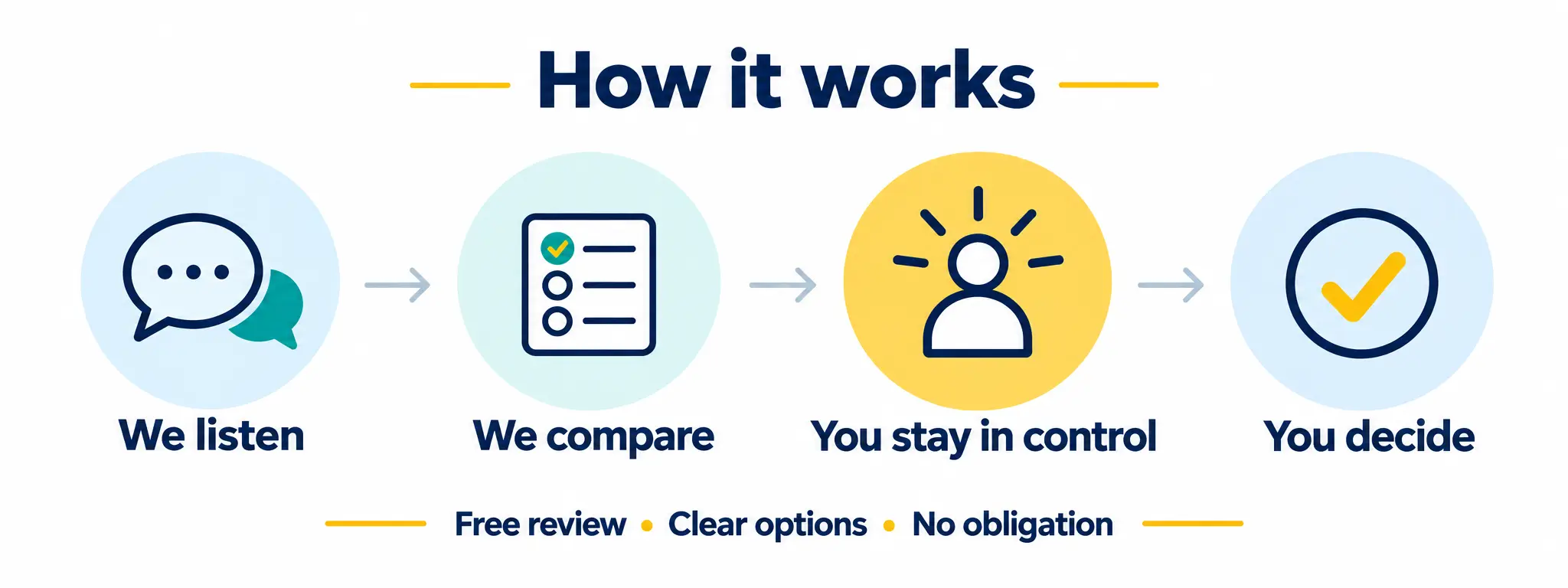
SME Sorted reviews the waste streams, volumes, current containers, collection pattern, access and existing charges.
We use that information to explore suitable container sizes, collection frequencies and participating-provider options.
Check the provider's formal quotation and service terms. Nothing changes unless you choose an option, sign the provider agreement and the provider accepts it.
Practical guide
Want to check your present service in more detail? Read our Are You Paying Too Much for Business Waste? A Small-Business Checklist or use our Complete Business Waste & Recycling Review Guide to work through waste streams, compliance, collections and contract costs step by step.
Questions, answered
Clear inputs make it easier to compare a practical service and understand the responsibilities that stay with your business.
There is no single best-value service for every SME. A café producing food waste and glass needs a different collection plan from an office producing mainly paper and packaging. Compare written quotations against the same waste streams, bin sizes, collection frequency and weight allowances. Include rental, excess-weight charges, contamination fees and price-review terms in the total. For businesses in Plymouth, Devon and Cornwall, local coverage and reliable access arrangements matter alongside price.
Recommendations are useful when they come from businesses with similar waste volumes and collection needs. Shortlist providers serving your postcode, check recent local feedback and ask how missed collections are resolved. Confirm that the carrier is registered and can handle the materials you produce. National review scores alone do not establish local service quality. SME Sorted can help explore participating-provider options, but does not publish a whole-market ranking or guarantee that one provider is best.
Compare the waste streams collected, bin capacity, collection frequency, included weight, excess-weight or contamination charges, rental, access conditions, contract length and any price-adjustment terms. Check that the waste carrier is registered, that the service accepts each waste stream and that the provider supplies the required transfer documentation. Ask about missed collections and check compliance requirements against current official guidance.
Waste produced through commercial activity is business or commercial waste. That includes waste from offices, shops, hospitality, construction and work carried out from home where the waste results from the business.
Possibly. Availability depends on the collectors serving your location, vehicle access, volumes and the waste streams your business produces. A review can assess whether ordinary streams can be consolidated with one provider and identify any specialist waste that needs a separate authorised service.
Since 31 March 2025, most workplaces in England have been required to arrange separate collection of dry recyclable materials, food waste and residual waste. Micro-firms with fewer than 10 full-time-equivalent employees have until 31 March 2027. Check the current GOV.UK guidance for the materials and exceptions that apply to you.
A waste transfer note, or a document containing the same information, is normally required for each load of non-hazardous waste moved from your premises. A season ticket may cover repeated transfers for up to a year when the relevant details stay the same. Both parties must complete and sign the record.
Start with the amount and type of waste produced between collections, available storage space, access, maximum weight and local service availability. Bag counts are only a guide because bag size, packing and waste density vary.
Collection vehicles need a safe, practical route to the containers. Narrow roads, gates, parked vehicles, steep gradients, restricted collection times or a hard-to-find bin store can change which service is available.
Yes. Some providers apply charges or refuse a collection when the wrong materials are placed in a container, the agreed weight is exceeded or access is not available. Charges and allowances vary, so read the quotation and agreement carefully.
Yes. We can review the present arrangement, record the contract end date and help you prepare for the right switching window. We do not promise that an existing agreement can be ended early.
No. Pricing, container availability, collection days and acceptance depend on location, access, waste type, volume and provider terms. A review can identify a better fit, but savings and service availability are not guaranteed.
No. SME Sorted does not charge your business for the review or introduction. If you choose a solution, the provider may pay SME Sorted a commission.
No. SME Sorted acts as an introducer and does not claim to search the whole market. Any collection, recycling or disposal service is supplied under a separate agreement with the chosen third-party provider.
Further reading: GOV.UK guidance on business waste responsibilities.
Sort and store waste safely, use an authorised carrier, describe it accurately, complete the required records and take reasonable steps to prevent illegal disposal. Read the official GOV.UK business-waste guidance and waste-transfer-note guidance.
Ready when you are
Share a recent bill and tell us what the business throws away, where the bins are and how often they are collected. We can help you explore suitable participating-provider options.