Your statement is hard to follow
Processing rates, per-transaction fees, monthly charges, terminal rental and VAT can appear in different places. SME Sorted helps you compare the complete cost.
Card payments & EPOS for UK SMEs
See the whole cost. Not just the headline rate.
Understand your business card processing costs and what you are really paying to take card payments. We can review your current merchant statement, processing charges, terminals and EPOS requirements, then explore suitable options from participating providers. The review is free and there is no obligation to change provider.
Free review No obligation
When a review can help
A fair comparison starts with what your business takes, how customers pay and every charge on the statement.
Processing rates, per-transaction fees, monthly charges, terminal rental and VAT can appear in different places. SME Sorted helps you compare the complete cost.
More face-to-face, online or telephone payments can change which rates and services matter most to your business.
Extra tills, sites, users, stock control or integrations may mean it is worth reviewing the terminals and EPOS tools you use.
The real cost stack
Not every provider uses every charge. Names, rates and inclusions vary, so the formal quotation and agreement always take priority.
Percentage charges can vary by transaction channel, card type and provider pricing structure.
Authorisation, Card Not Present or separate secure-transaction charges may apply.
These may include PCI-related, gateway or portal, statement and minimum-service charges.
Check terminal rental, VAT, contract length, replacement terms and early-termination charges.
Compare the whole monthly cost
A low percentage rate does not necessarily mean the lowest overall bill. To compare merchant-service options fairly, use the same monthly card turnover and transaction count, and include percentage fees, per-transaction charges, terminal hire and recurring service fees.
| Cost component | Example calculation | Monthly amount |
|---|---|---|
| Percentage processing charges | £20,000 × 0.80% | £160.00 |
| Per-transaction charges | 700 × £0.04 | £28.00 |
| Terminal rental | Fixed monthly charge | £20.00 |
| PCI-related service charge | Fixed monthly charge | £5.00 |
| Payment gateway / portal | Fixed monthly charge | £10.00 |
| Total monthly processing and service cost | £223.00 | |
Effective cost as a percentage of card turnover: £223 ÷ £20,000 × 100 = 1.115% (approximately 1.12%). This is higher than the example 0.80% headline processing rate because it includes other charges.
This is an illustrative calculation, not a live provider quotation or a guaranteed rate. Real pricing varies by card type, payment channel, transaction mix, contract terms and additional or exceptional charges. Check which fees are subject to VAT and compare all quotes on a consistent basis. Refunds, chargebacks, minimum monthly service charges, early termination, EPOS software and other fees may need to be added where applicable.
Use the Card Payments & EPOS Review Guide for a complete statement and contract checklist.
A merchant-services comparison should cover more than a card machine's advertised percentage rate. For a business in Plymouth, Devon or Cornwall, it can be useful to compare the complete merchant statement, the monthly card turnover, the number of transactions, terminal rental and the cost of supporting services. A provider that looks competitive for a shop taking mostly in-person payments may not offer the same overall value to a business taking online, phone or international-card transactions.
SME Sorted helps local businesses review participating-provider options for countertop, portable or mobile card terminals, online payments and compatible EPOS systems. The aim is a like-for-like assessment of charges, features and contractual commitments, not an assertion that every provider in the market has been assessed.
Plain-English fee glossary
Provider terminology is not standardised. Use these explanations as a guide, then check the definitions in your own tariff and agreement.
A set of technical and operational requirements designed to protect payment-card data. It applies to merchants and other entities involved in payment processing, including those that store, process or transmit cardholder data. It is a security standard—not a provider fee or a certificate sold by the PCI Security Standards Council.
Some providers charge for compliance support, validation tools or related administration. The name and service included vary, so check the provider’s tariff and agreement.
Some providers apply a recurring charge when their records show that required PCI DSS validation has not been completed or maintained. Paying the charge does not make a business compliant.
A minimum amount the provider may require in eligible processing charges each month. If those charges do not reach the minimum, the provider may charge the difference, depending on the contract.
A charge that may be applied when a card transaction is sent for authorisation, in addition to any percentage processing rate.
In a typical four-party card transaction, the acquirer pays an interchange fee to the bank or provider that issued the customer’s card. The amount can vary with factors such as the card and transaction type and forms part of the cost passed through or built into merchant pricing.
Commonly, the underlying interchange cost is passed through and the acquirer adds an agreed margin or merchant service charge. Card-scheme fees may be included in that additional charge or shown separately, so confirm exactly what the provider’s single ‘+’ covers.
Commonly, the price separates three elements: the underlying interchange fee, card-scheme fees and the acquirer’s margin. This can provide more detail, but the final cost still depends on the transaction mix and any additional fees.
A provider combines underlying costs and its margin into one rate or a small set of rates. This can be simpler to read, but different card or transaction categories may still have different rates and separate fixed or per-transaction charges may remain.
Usually a face-to-face terminal transaction. Providers often use a Card Present rate as a headline figure, but the total cost can include other transaction and monthly charges.
Transactions taken online, by telephone or by another remote method are generally Card Not Present. They may carry different rates or fees from face-to-face transactions.
Some providers charge separately for services such as transaction authentication or fraud-screening. This is not necessarily the same as the Card Not Present processing rate.
Usually quoted per item and excluding VAT. Check the number of devices, minimum rental term, replacement arrangements, ownership and early-termination conditions.
A monthly charge may apply for an online payment gateway, virtual terminal or management portal. The service may include reporting and statements, depending on the provider.
Some providers charge separately for paper or electronic statements. Confirm the format, frequency and whether statements are already included in another service fee.
For authoritative information about the standard and merchant responsibilities, visit the PCI Security Standards Council’s merchant resources.
Choose the right payment setup
Features, integrations and support can be as important as the transaction rate.
Choose terminal hardware around where customers pay, connectivity, battery life, receipt needs and the number of users—not just the rental figure.
A compatible EPOS and payment setup can connect till, order, payment and reporting workflows. Confirm what integrates, what remains separate and who supports each component.
Review gateway charges, transaction rates, settlement, refunds, fraud controls and compatibility with your website or online shop.
A virtual terminal may support remote payments. Check Card Not Present pricing, security responsibilities and which staff can access the service.
What helps us compare accurately
Never share full card numbers, security codes or customer payment data with SME Sorted.
How it works
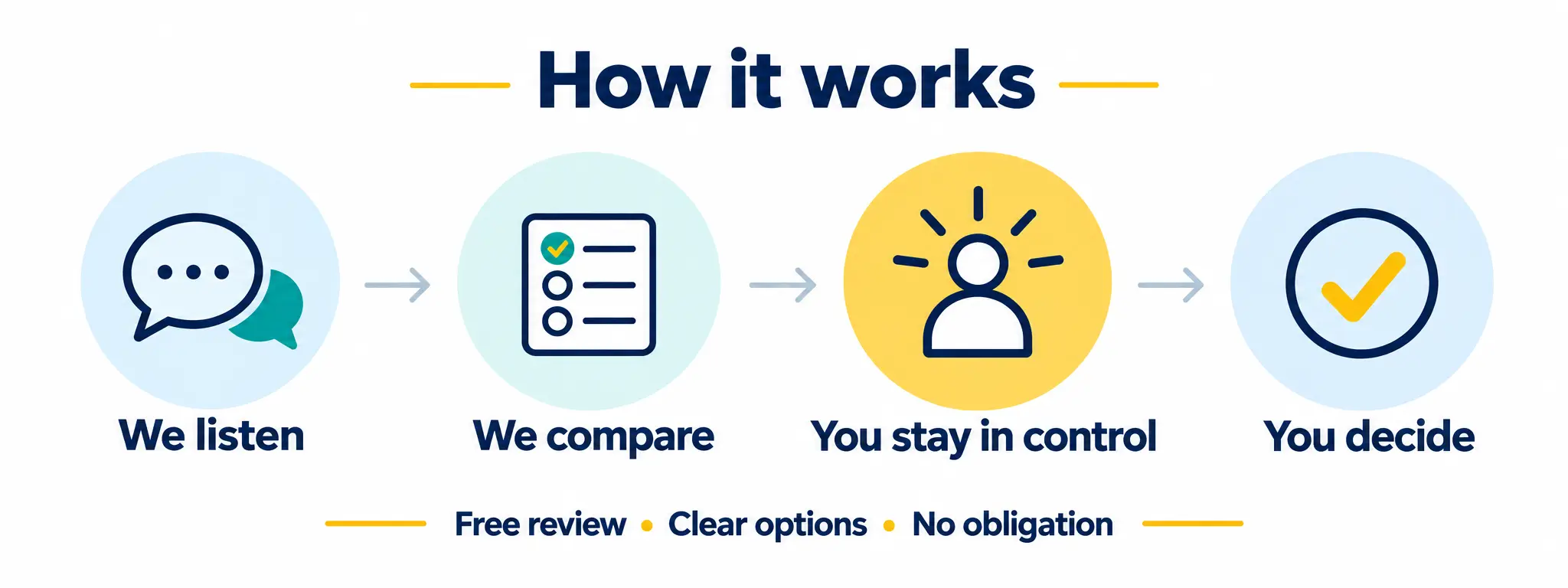
Provide recent statements and, where available, current processing and rental agreements. Do not send full card numbers or customer payment data.
SME Sorted reviews the transaction mix, percentage rates, per-transaction fees, fixed charges, equipment rental, VAT and key contract terms.
Where suitable options are available, compare the provider’s formal quotation and agreement. Nothing changes unless you decide to proceed and the provider accepts the application.
Practical guide
Want to go through your statement in more detail? Read our Seven Hidden Card-Processing Charges to Check guide or use our Complete Card Payments & EPOS Review Guide to work through your current arrangement step by step.
Questions, answered
Clear definitions make it easier to spot what is—and is not—included.
Square’s UK point-of-sale tools support digital tipping and certain signed-receipt workflows, subject to the payment method and setup. Its sign-and-tip option on printed receipts cannot be used with contactless payments. When comparing card terminals or EPOS systems, ask for a demonstration of the exact tipping and signature features you need, including receipts, reporting and staff access. Confirm compatibility and any additional charges with the provider before choosing equipment; features vary by product and region.
It is only one part of the price. Your total cost may also include different rates for card types and payment channels, authorisation fees, monthly charges, terminal rental, VAT and other contract charges.
Start with a representative merchant statement and add together the relevant processing and service charges for the period. Divide that total by the card turnover processed during the same period and multiply by 100 to calculate a broad effective cost percentage. Check the individual fees as well, because different transaction types and services may be priced differently.
Card Present usually means the customer and card are physically present at the point of sale. Card Not Present generally covers online, telephone and other remote transactions. Rates, security processes and provider terms can differ.
No. PCI DSS compliance is about meeting and, where required, validating the applicable security requirements. A provider fee does not itself establish compliance. Ask the provider what the fee covers and what actions your business must complete.
It usually means Minimum Monthly Service Charge. Depending on the contract, if eligible monthly processing charges fall below the agreed minimum, the provider may charge the difference.
It is commonly shown excluding VAT, but you should confirm this on every quotation. Check the rental per device, VAT, minimum term, replacement arrangements and any early-termination charge.
Recent merchant statements and the current processing and equipment agreements are the best starting point. You can redact bank details and personal information, and you should never send full card numbers or customer payment data.
No. A review may identify a better fit or clearer pricing, but savings and acceptance are not guaranteed. Compare the provider’s full quotation, assumptions and contract before deciding.
No. SME Sorted does not charge your business for the review or introduction. If you choose a solution, the provider may pay SME Sorted a commission.
No. SME Sorted is an introducer, does not claim to search the whole market and does not process card payments or supply EPOS equipment. Any service is provided under a separate agreement with the chosen third-party provider.
Feature details: Square’s UK guidance on payments and tips. Confirm the current setup with your provider.
Ready when you are
Share recent statements and tell us how your customers pay. We can help you understand the charges and explore suitable participating-provider options.