Smooth short-term cash flow
A gap between customer payments and supplier bills can put pressure on cash flow. If you are exploring working capital for stock, wages or seasonal costs, consider the repayment timetable and full amount repayable.
Business finance & banking for UK SMEs
Start with the purpose. Then find the finance.
A straightforward introduction to business funding, banking and cashback credit-card options—focused on what the business needs to achieve and what it can afford to repay.
Free introduction No obligation
A business looking at cash-flow funding, growth finance or a new business bank account should begin with the purpose of the product. A useful review considers the amount required, intended use, likely repayment affordability, eligibility criteria, any security or guarantee, ongoing fees and the full terms of the participating provider. SME Sorted makes introductions but does not lend, issue credit cards or provide regulated financial advice.
Begin with the business goal
The right starting point is the commercial purpose—not a maximum borrowing figure.
A gap between customer payments and supplier bills can put pressure on cash flow. If you are exploring working capital for stock, wages or seasonal costs, consider the repayment timetable and full amount repayable.
Match the finance term and repayment pattern to the useful life of the stock, machinery or equipment being funded.
Explore finance for a new location, refurbishment, marketing or additional capacity when the expected return supports the commitment.
Banking & business cards
SME Sorted can introduce options for everyday banking and eligible business credit cards as well as longer-term funding.
Review account fees, payment tools, cards, support, integrations and ways to control everyday business spending.
Eligible businesses may be able to earn cashback or rewards on qualifying business purchases while tracking and managing team spending.
Keep the purpose separate: an account manages money, a credit card funds short-term spending and a loan or advance supports a defined business need.
A defined business purpose
Every application is assessed individually, and approval is never guaranteed.
Before signing
If a director or owner gives a personal guarantee, the provider may pursue them personally if the business cannot meet the obligation. Secured borrowing can also put the secured asset or property at risk.
Read the agreement and guarantee carefully. Consider independent legal or financial advice if you do not fully understand the consequences.
How it works
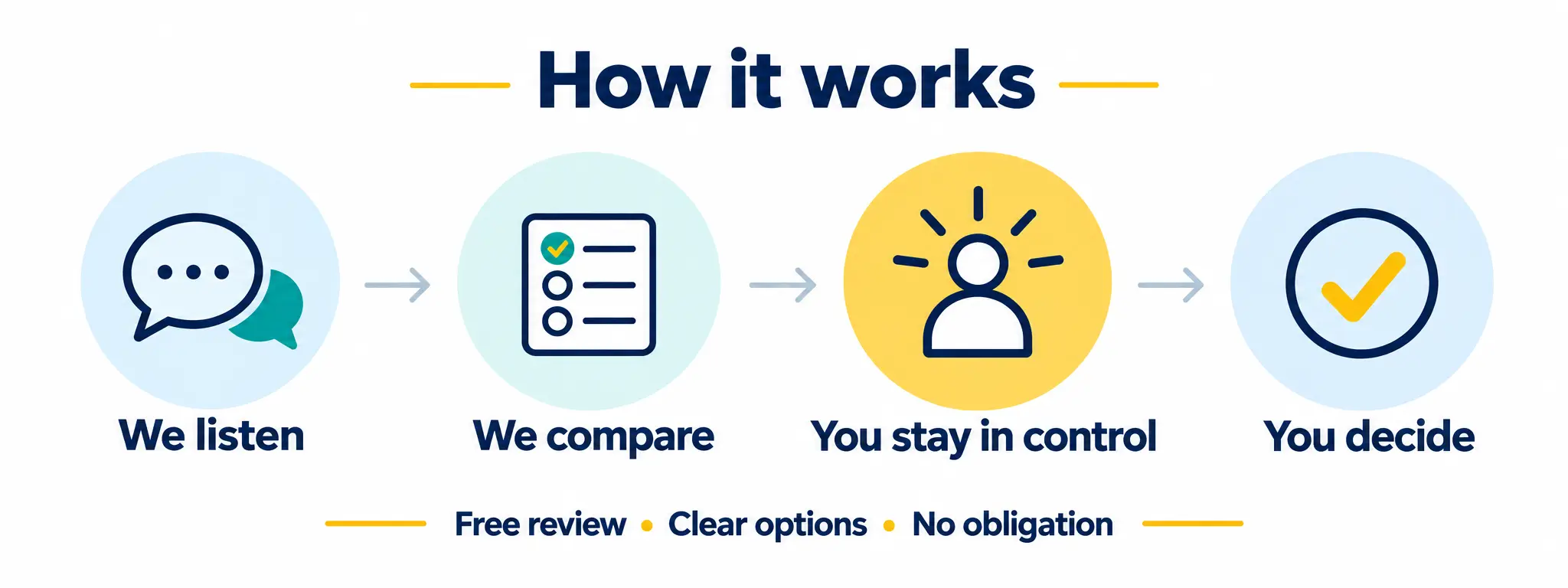
Tell SME Sorted what the business needs to achieve, how much may be required and what repayment pattern the business could realistically support.
A provider may request bank statements, trading history, turnover, director or owner details, accounts and information about existing borrowing.
Compare the full cost, total repayable, term, security, guarantees and repayment method. Proceed only if the provider accepts the application and you are comfortable with the agreement.
Practical guide
Read our festive business-finance guide to forecast the need, compare faster funding routes and check the complete repayment commitment.
Questions, answered
Business finance is a serious decision. Ask questions before accepting any agreement.
No. SME Sorted does not charge your business for the review or introduction. If you take a product, the lender, broker or provider may pay SME Sorted a commission.
No. SME Sorted acts as an introducer, not a lender, bank, credit broker or financial adviser. Applications, affordability checks, explanations, offers and agreements are handled by the relevant third-party provider or authorised broker.
No. SME Sorted does not claim to search the whole market. Products are available through participating providers and brokers, and the options depend on the business, the purpose and eligibility.
With some products, the provider advances an agreed amount and collects an agreed percentage of eligible future sales until the agreed total repayment has been reached. This can make collections flex with trading, but the business must understand the fixed fee, total repayment and payment-routing arrangements.
Possibly. Some providers require a director or owner to guarantee the business obligation personally. A personal guarantee can put personal assets at risk if the business cannot pay, so read it carefully and consider independent legal advice before signing.
It may. The provider should explain whether an eligibility check or application uses a soft or hard credit search before it is carried out. Do not assume that every quotation or application has the same effect.
Some providers can make decisions quickly when the application and supporting documents are complete, but there is no guaranteed decision or payment time. Checks, contracts, payment arrangements and the complexity of the application can all affect timing.
Compare the amount received, total repayable, interest or fixed fee, repayment timing, term, security, personal guarantees, early-repayment terms and what happens if payments are missed. The lowest regular payment is not necessarily the lowest total cost.
Ready when you are
Share the purpose, approximate amount and preferred timescale. SME Sorted can then discuss the most relevant introduction.